
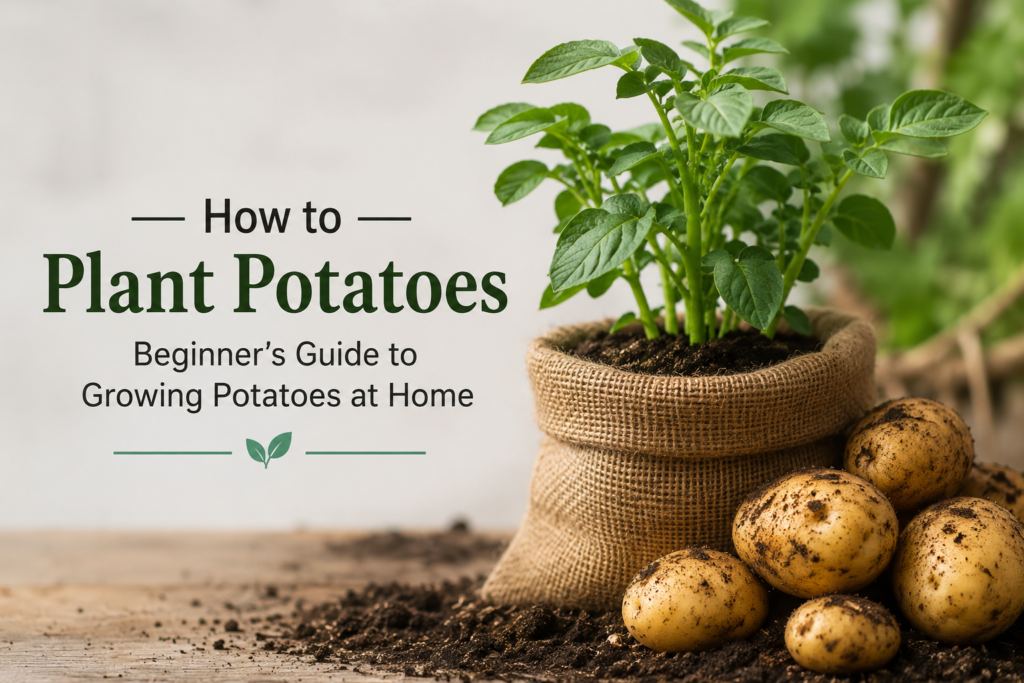
Few vegetables are as satisfying to grow as potatoes. Plant one seed potato, give it the right care, and you’ll harvest several fresh potatoes just a few months later. Whether you’re growing them in a garden bed, raised bed, or grow bag, this guide covers everything you need to know for a healthy, productive crop.
Quick Highlights for Planting Potatoes
- Always plant certified seed potatoes, not supermarket potatoes.
- Most potatoes need 70 to 135 days to mature, depending on the variety.
- Provide 6 to 8 hours of direct sunlight daily.
- Use loose, well-draining soil with a pH between 5.5 and 6.5.
- A good soil mix is 40% garden soil, 40% compost, and 20% coarse sand or perlite.
- Plant seed potatoes 4 to 6 inches deep with the eyes facing upward.
- Space plants 10 to 12 inches apart.
- Water consistently to keep soil evenly moist, especially once tubers begin forming.
- Hill the plants as they grow to increase yields and prevent green potatoes.
- Grow bags of 15 to 20 gallons work exceptionally well for home gardeners.
Choosing the Right Seed Potatoes
The first step in planting potatoes is choosing certified seed potatoes. These are disease-free tubers grown specifically for planting, making them much more reliable than grocery store potatoes. Supermarket potatoes are often treated to delay sprouting and may carry diseases that reduce yields or spread problems to your garden.
If a seed potato is larger than a chicken egg, cut it into pieces before planting. Each piece should have at least one or two healthy “eyes,” which are the small buds that produce new shoots. Let the cut surfaces dry for about 24 hours before planting to reduce the risk of rotting in the soil.
Many gardeners also “chit” their seed potatoes before planting. Simply place them in a cool, bright location for two to four weeks until short, sturdy green sprouts develop. Chitting can speed up emergence and often results in an earlier harvest, especially for first early potato varieties.
Which Potato Varieties Should You Grow?
Not all potatoes grow at the same speed. Choosing the right variety depends on how quickly you want to harvest and how you plan to use them in the kitchen.
| Variety Type | Days to Maturity | Best For |
|---|---|---|
| Early | 70 to 90 days | Quick harvests, salads, boiling |
| Mid-season | 90 to 110 days | All-purpose cooking |
| Late | 110 to 135 days | Long-term storage, baking |
Popular beginner-friendly varieties include Yukon Gold, Red Norland, and Kennebec because they’re productive, dependable, and relatively easy to grow. If you’re mainly interested in storing potatoes through winter, late-season varieties like Russet Burbank or German Butterball are excellent choices.
How to Plant Potatoes the Right Way
When learning how to plant potatoes, proper spacing is just as important as good soil. Dig a trench or planting hole about 4 to 6 inches deep, then place each seed potato with the sprouts or eyes facing upward.
Leave 10 to 12 inches between each potato so the developing tubers have enough room to expand. If you’re planting multiple rows, keep about 24 to 30 inches between rows to improve airflow and make hilling much easier later in the season.
Cover the seed potatoes with soil and water thoroughly after planting. Shoots usually emerge within two to four weeks, depending on soil temperature and whether the potatoes were chitted beforehand.
What Is the Best Container for Growing Potatoes?
One of the easiest ways of growing potatoes organically is in large containers or grow bags. They provide excellent drainage, make hilling simple, and allow you to harvest without digging through garden beds.
Choose a container that’s at least 15 to 20 gallons and around 16 to 18 inches deep. This size comfortably supports two or three seed potatoes while giving the developing tubers enough space to grow. Whatever container you choose, make sure it has plenty of drainage holes to prevent water from collecting around the roots.
Recommended Grow Bags for Potatoes
Fabric grow bags provide excellent drainage, naturally air-prune roots, and make harvesting much easier than traditional pots. If you’re growing potatoes on a balcony or terrace, they’re one of the easiest options to start with.
I recommend using a 20-gallon fabric grow bag for the best yields. Buy one on Amazon.
Best Soil Mix for Healthy Potatoes
A loose, airy soil is one of the biggest factors that determines your harvest. Heavy clay soils often produce smaller, misshapen potatoes because the tubers struggle to expand underground.
For containers, a reliable soil mix is:
- 40% garden soil
- 40% well-rotted compost
- 20% coarse sand or perlite
Potatoes grow best in slightly acidic soil with a pH between 5.5 and 6.5. This pH range helps reduce the risk of common diseases like potato scab while allowing the plants to absorb nutrients efficiently.
How Much Sunlight Do Potatoes Need?
If you’re wondering how to grow potatoes successfully, don’t underestimate sunlight. Potato plants need 6 to 8 hours of direct sunlight every day to produce enough energy for healthy foliage and large underground tubers.
Plants grown in too much shade often produce tall, leafy stems but very few potatoes. If you’re growing in containers, place them in the sunniest part of your balcony, terrace, or garden and rotate them occasionally so all sides receive even light.
How Often Should You Water Potato Plants?
Consistent watering is one of the biggest factors that determines the size and quality of your harvest. Potato plants prefer evenly moist soil, but they dislike sitting in water for long periods. Overwatering can lead to seed potato rot, while long dry spells often produce small or cracked potatoes.
Water deeply whenever the top 1 to 2 inches of soil feel dry. During hot weather, containers may need watering every day, while garden beds usually need less frequent irrigation. The most important period is when tubers begin developing, as moisture stress during this stage can significantly reduce yields.
What Is the Best Fertilizer for Growing Potatoes?
Potatoes are heavy feeders, but more fertilizer doesn’t always mean more potatoes. Excess nitrogen encourages lush green leaves at the expense of tuber production, so it’s important to keep nutrition balanced throughout the growing season.
Before planting, mix plenty of finished compost into the soil. Once plants reach about 6 inches tall, feed every 2 to 3 weeks with a balanced vegetable fertilizer or one slightly higher in phosphorus and potassium than nitrogen. Stop fertilizing once the foliage begins yellowing, as the tubers are nearing maturity.
Growing Potato Stages Explained
Understanding the growing potato stages makes it easier to care for your plants at the right time.
Stage 1: Sprouting
The eyes on the seed potato develop shoots and roots beneath the soil. Depending on temperature, this usually takes 2 to 4 weeks after planting. Warm soil encourages faster emergence, while cold soil slows growth considerably.
Stage 2: Vegetative Growth
Green stems and leaves grow rapidly above the soil as the plant builds energy through photosynthesis. This stage is when regular watering, sunlight, and the first fertilizer application help establish a strong, healthy plant capable of producing a larger harvest.
Stage 3: Tuber Formation
Small potatoes begin forming underground shortly before or around flowering. This is the most critical stage for watering because inconsistent moisture can cause uneven growth, hollow centers, or cracked tubers. Keep the soil consistently moist without making it soggy.
Stage 4: Tuber Bulking
The young potatoes rapidly increase in size during this stage. Continue watering regularly and avoid disturbing the soil around the roots. Healthy foliage is essential because the leaves continue producing the energy needed to enlarge the developing tubers.
Stage 5: Maturity
The leaves gradually turn yellow, dry, and collapse as the plant naturally finishes its life cycle. At this point, the potato skins toughen, making them suitable for long-term storage. Once most of the foliage has died back, harvesting can begin.
Why Is Hilling Important When Growing Potatoes?
Hilling simply means pulling loose soil around the stems as the plants grow. Start when plants are about 6 to 8 inches tall, then repeat every two to three weeks until the mound reaches roughly 8 to 10 inches high.
Hilling protects developing potatoes from sunlight, which causes them to turn green and produce solanine, a naturally occurring toxin. It also encourages more underground stems, giving the plant additional places to form tubers and often improving overall yields.
Common Mistakes to Avoid When Planting Potatoes
Even experienced gardeners occasionally make mistakes when planting potatoes, but avoiding a few common problems can greatly improve your harvest.
- Planting grocery store potatoes instead of certified seed potatoes.
- Using heavy clay soil that drains poorly.
- Overwatering or allowing the soil to stay waterlogged.
- Forgetting to hill plants as they grow.
- Applying excessive nitrogen fertilizer.
- Harvesting too early before the skins have fully matured.
When and How to Harvest Potatoes
The right harvest time depends on whether you want tender new potatoes or fully mature potatoes for long-term storage.
For new potatoes:
- Harvest about 2 to 3 weeks after flowering.
- Gently dig around the plant and remove only the larger tubers.
- Leave the remaining potatoes to continue growing.
For mature potatoes:
- Wait until the foliage has completely yellowed and died back.
- Harvest on a dry day for cleaner potatoes.
- Use a garden fork carefully to avoid damaging the tubers.
- Brush off loose soil but do not wash the potatoes before storage.
- Cure harvested potatoes in a cool, shaded place before storing.
How to Store Potatoes After Harvest
Proper storage helps potatoes stay fresh for several months and reduces spoilage. Follow these simple steps after harvesting.
Storage tips:
Check your stored potatoes every few weeks and use any that begin sprouting or softening first.
Cure freshly harvested potatoes in a cool, dark, well-ventilated place for 7 to 14 days to toughen the skins and heal small cuts.
Store cured potatoes at 45 to 50°F (7 to 10°C) in a dark, dry location with good airflow.
Use a paper bag, cardboard box, mesh bag, or woven basket instead of airtight containers.
Keep potatoes away from direct sunlight to prevent them from turning green.
Do not refrigerate potatoes, as cold temperatures convert starch into sugar and can affect their taste and texture.
Remove any damaged or rotting potatoes regularly to prevent them from spoiling the rest of the harvest.
Store potatoes separately from onions, as both release gases that can cause the other to spoil faster.
FAQs
What Is the Best Way to Plant Potatoes?
The best way to plant potatoes is to use certified seed potatoes rather than grocery store potatoes. Plant them 4 to 6 inches deep with the eyes facing upward in loose, well-draining soil. Space each seed potato 10 to 12 inches apart and hill the plants as they grow to encourage higher yields and prevent green potatoes.
Can I Grow a Potato From a Potato?
Yes, you can grow a potato from a potato, but certified seed potatoes are the better choice. They are disease-free, sprout more reliably, and produce healthier plants. If using a potato for planting, make sure it has healthy eyes and let any cut pieces dry for about 24 hours before planting.
How Long Do Potatoes Take to Grow at Home?
Most potatoes take between 70 and 135 days to mature, depending on the variety you grow. Early varieties are usually ready within 70 to 90 days, while late-season potatoes can take over four months. Proper sunlight, watering, soil quality, and regular care all help produce a healthy harvest.
Can You Plant Potatoes Directly Into Soil?
Yes, potatoes grow well when planted directly into loose, fertile, and well-draining soil. Plant seed potatoes about 4 to 6 inches deep with the eyes facing upward and keep the soil consistently moist. Avoid heavy clay soil because it can restrict tuber growth and reduce your overall harvest.
Which Is the Best Month to Plant Potatoes?
The best month to plant potatoes depends on your climate. In most parts of India, October to November is ideal, while cooler hill regions often plant in spring. In temperate countries, plant after the last frost when soil temperatures reach at least 45°F (7°C) for reliable sprouting.
Which Fertilizer Is Best for Potatoes?
A balanced vegetable fertilizer or one slightly higher in phosphorus and potassium than nitrogen is best for potatoes. It supports strong root development and healthy tuber growth without encouraging excessive leafy growth. Adding well-rotted compost before planting also improves soil fertility and provides slow-release nutrients throughout the season.
Should I Water Potatoes Every Day?
No, potatoes do not usually need daily watering. Water deeply whenever the top 1 to 2 inches of soil feel dry to keep the soil evenly moist. During hot weather, potatoes grown in containers may need watering every day, while garden-grown plants usually require less frequent watering.
What Should Not Be Planted Near Potatoes?
Avoid planting potatoes near tomatoes, peppers, eggplants, or other members of the nightshade family because they share many of the same pests and diseases. Fennel should also be avoided as it can inhibit nearby plant growth. Good companion plants include beans, peas, cabbage, marigolds, and onions.