
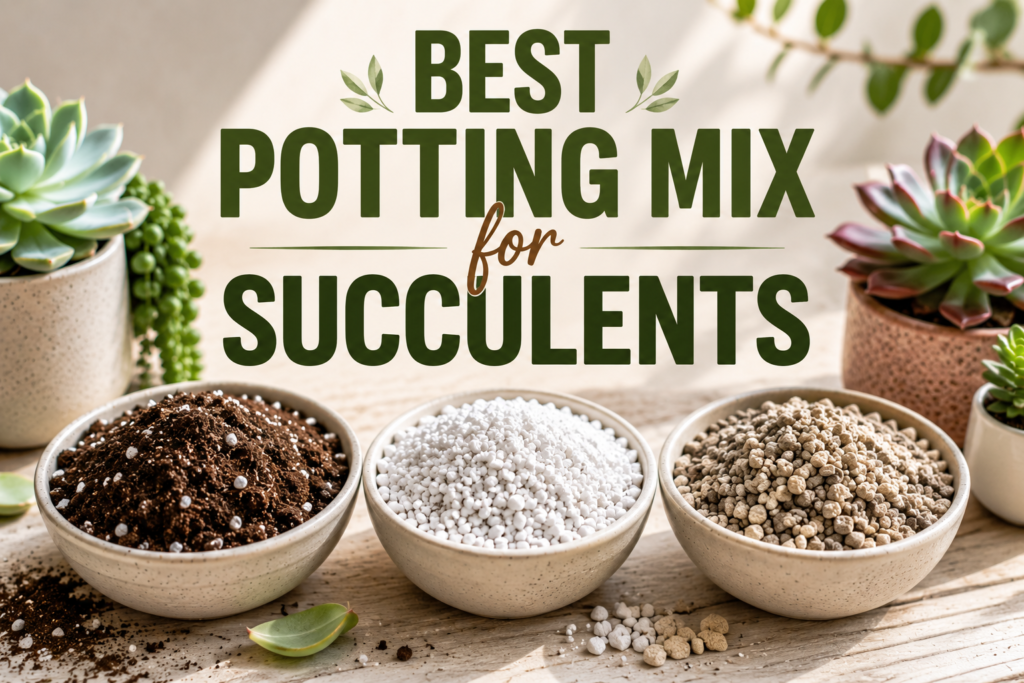
Succulents are famous for being low maintenance, but they’re not impossible to kill. In fact, most struggling succulents aren’t suffering from too much love or too little sunlight. The real culprit is often hiding beneath the surface. An unsuitable potting mix for succulents can hold excess moisture, suffocate roots, and eventually lead to rot.
The good news is that choosing the right soil isn’t complicated. Once you understand what succulent roots actually need, you’ll find it much easier to keep your plants healthy for years. Whether you’re mixing your own soil or buying a ready made succulent potting mix, this guide will help you make the right choice.
What is the best potting mix for succulents?
The best potting mix for succulents is one that drains water quickly while allowing plenty of air to reach the roots. Unlike tropical houseplants, succulents evolved in rocky landscapes where water disappears fast. Their roots are designed to absorb moisture quickly and then dry out before the next watering.
A good succulent potting mix should have these qualities:
- Fast draining
- Light and airy
- Gritty rather than dense
- Dries within a few days after watering
- Contains mineral ingredients like perlite or pumice
If your soil stays damp for a week or more, it’s usually holding too much moisture for most succulents.
An easy soil recipe for succulents
If you enjoy making your own potting mix, you only need three simple ingredients. This recipe works well for popular succulents like jade plants, echeverias, haworthias, aloe vera, and many varieties of sedum grown indoors or on balconies.
Basic DIY recipe
- 2 parts quality potting soil
- 1 part perlite
- 1 part pumice, coarse horticultural sand, or crushed lava rock
This balanced soil recipe for succulents provides enough organic matter to retain a little moisture while allowing excess water to drain away quickly. The result is a loose, airy mix that encourages healthy root growth instead of creating soggy conditions where fungal diseases thrive.
Why each ingredient matters
Potting soil
Potting soil forms the base of your mix by supplying organic matter, nutrients, and just enough moisture retention for roots to absorb water after each watering. Choose a standard indoor potting mix instead of moisture control formulas, which stay wet much longer than succulents prefer and often contribute to root problems.
If you’re buying supplies separately, a quality indoor potting soil is a worthwhile investment because you’ll also use it for many other houseplants. Once you have the basics, it’s easy to build a customized mix instead of relying entirely on a commercial succulent potting mix.
Recommended product: This indoor potting soil is a great base for creating a healthy succulent soil mix.
Perlite
Perlite is the lightweight white volcanic mineral commonly found in premium potting mixes. It creates tiny air pockets throughout the soil, improving drainage while preventing the mix from becoming compact over time. Better airflow around the roots also reduces the chance of fungal diseases developing after watering.
A single bag of horticultural perlite lasts through multiple repotting sessions, making it one of the most affordable upgrades you can make. If you’re planning to build your own potting mix for succulents, this is one ingredient that’s well worth adding to your gardening shelf.
Recommended product: This horticultural perlite is an easy way to improve drainage and keep succulent roots healthy.
Pumice or coarse grit
Pumice is often considered one of the best mineral ingredients because it improves drainage without floating to the surface the way perlite sometimes can. It also helps anchor larger succulents, making the pot more stable while creating excellent air spaces around the root system.
If pumice isn’t easily available, coarse horticultural sand, crushed lava rock, or fine gravel designed for gardening are good alternatives. Avoid play sand or beach sand because the tiny particles pack tightly together, reducing drainage instead of improving it.
Recommended product: For even better drainage, this horticultural pumice is an excellent addition to your mix.
Can you use regular potting soil?
Regular potting soil isn’t automatically harmful, but using it on its own usually isn’t the best idea. Most standard mixes are designed for leafy houseplants that enjoy consistently moist conditions. Succulents have very different needs and often struggle when the soil stays damp for long periods.
If regular potting soil is all you have, simply mix it with an equal amount of perlite or pumice before planting. This small adjustment dramatically improves drainage and creates a much safer growing environment without requiring you to buy an entirely new bag of soil.
Is ready made succulent soil worth buying?
Ready made succulent potting mix is an excellent option if you don’t want to store multiple bags of ingredients or spend time measuring everything yourself. Most reputable cactus and succulent mixes already contain drainage materials such as perlite, pumice, or coarse sand, making them suitable for everyday use.
Before purchasing, read the ingredient list and customer reviews instead of choosing the cheapest option available. If you’d rather skip the DIY, this succulent soil mix online is a convenient ready-to-use option.
Common soil mistakes that kill succulents
Even experienced plant owners occasionally lose succulents because of simple soil mistakes rather than watering frequency. Fortunately, most of these problems are easy to avoid once you understand how succulent roots behave after receiving water.
Avoid these common mistakes:
- Using heavy garden soil in pots
- Choosing moisture retaining potting mixes
- Adding rocks at the bottom instead of using drainage holes
- Using fine beach or play sand
- Growing succulents in pots without drainage holes
- Packing the soil too tightly around the roots
Healthy roots depend on fast drainage throughout the entire pot, not just at the bottom. That’s why improving the soil itself is far more effective than adding a decorative gravel layer underneath.
FAQs
How do I make my own succulent potting mix?
A simple DIY potting mix for succulents combines 2 parts quality potting soil, 1 part perlite, and 1 part pumice, coarse sand, or lava rock. This creates a fast draining, airy mix that prevents root rot while providing enough moisture for healthy root growth.
Can I use normal potting mix for succulents?
Yes, but not on its own. Regular potting mix usually holds too much moisture, which can lead to root rot. Improve it by mixing in equal parts perlite or pumice to increase drainage and airflow, making it much safer for most succulents.
What is the best potting mix for succulents?
The best succulent potting mix is loose, gritty, and fast draining. It should contain a balance of organic material for nutrients and mineral ingredients like perlite, pumice, or coarse sand to improve aeration. Commercial cactus and succulent mixes are also excellent choices for beginners.
Is cocopeat good for succulents?
Cocopeat can be used, but only as part of a well-draining mix. On its own, it retains too much moisture for most succulents. Limit it to a small portion of the mix and combine it with perlite, pumice, or coarse sand to ensure excess water drains away quickly.
What helps succulents grow faster?
Healthy succulents grow faster when they receive bright light, well-draining soil, proper watering, and adequate airflow. Water deeply only after the soil has dried completely, use a pot with drainage holes, and feed with a diluted succulent fertilizer during the active growing season for steady, healthy growth.