
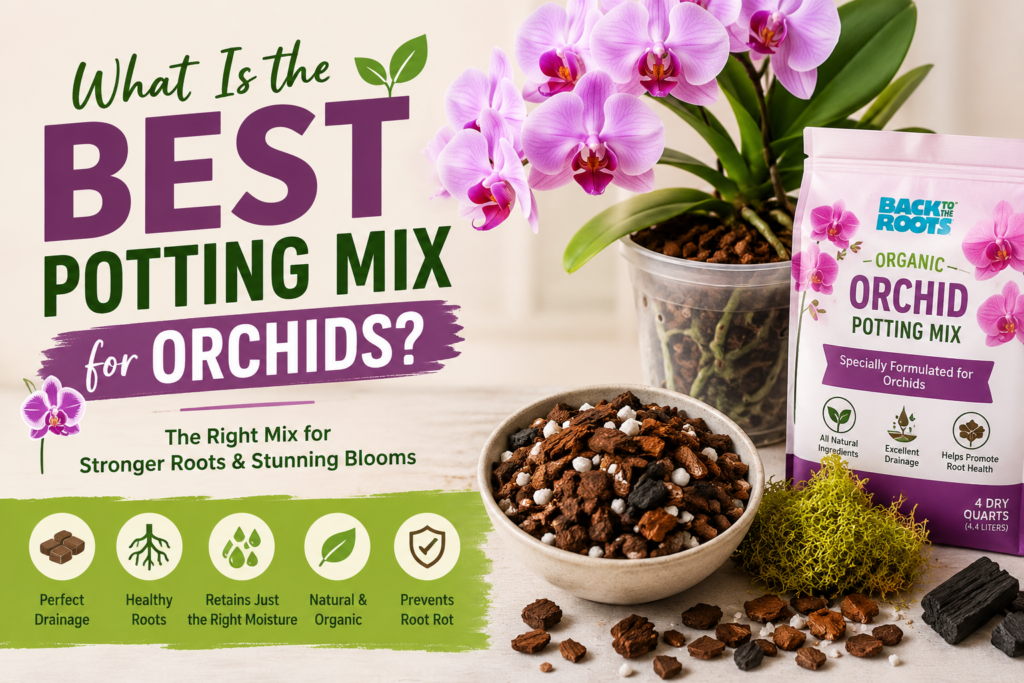
If you’ve ever bought a beautiful orchid only to watch it struggle a few months later, the potting mix could be the reason. Unlike most houseplants, orchids don’t like sitting in regular potting soil. In fact, using the wrong growing medium is one of the biggest reasons orchid roots rot and plants stop blooming.
The right orchid potting mix is light, chunky, and drains quickly while still holding just enough moisture around the roots. In this guide, you’ll learn what makes the best mix, the ingredients it should contain, whether it’s worth making your own, and how to choose the right one for your orchid.
Quick Highlights
- Most orchids grow best in a chunky orchid potting mix made with bark instead of regular potting soil.
- DIY orchid potting mix recipe: 4 parts orchid bark, 1 part perlite, 1 part horticultural charcoal, and ½ part sphagnum moss for the perfect balance of drainage and moisture retention.
- Refresh your orchid potting mix every 1 to 2 years, or whenever the bark starts breaking down and loses its chunky texture.
- Don’t want to mix your own? A quality ready-made orchid-specific potting mix like this one takes the guesswork out of orchid care and is a great choice for beginners.
Why Do Orchids Need a Special Potting Mix?
Here’s something many first-time orchid owners don’t realise: most orchids aren’t actually soil plants. Popular varieties like Phalaenopsis orchids naturally grow attached to tree trunks, where their roots are exposed to fresh air, rain, and humidity instead of being buried underground.
That’s why regular potting mix and potting soil simply don’t work for them. Traditional potting soil holds onto water for much longer than orchid roots can handle, leaving them damp for days. Before long, those healthy green roots can turn brown, mushy, and start rotting.
A good orchid potting mix does the opposite. It creates plenty of air pockets around the roots while letting excess water drain away quickly. That balance of moisture and airflow is exactly what orchids need to develop strong roots, absorb nutrients efficiently, and reward you with healthy leaves and beautiful blooms year after year.
What Makes the Best Orchid Potting Mix?
Not all orchid mixes are created equal. The best orchid potting mix isn’t made of fine soil. Instead, it contains chunky, lightweight ingredients that allow water to drain quickly while keeping plenty of air around the roots. This closely mimics how most orchids grow in nature, attached to tree branches rather than buried in the ground.
A good mix should hold just enough moisture to keep the roots hydrated without staying wet for too long. The ideal balance comes from combining bark, moisture-retaining materials, and airy amendments that work together to create a healthy growing environment. Here are the key ingredients you’ll find in a quality orchid potting mix.
Orchid Bark
The foundation of almost every orchid bark potting mix is, unsurprisingly, bark. It creates large air pockets around the roots, prevents water from sitting for too long, and gives orchids the support they need to grow naturally. Without bark, most orchid mixes would stay far too dense and soggy.
When choosing orchid bark for potting mix, you’ll usually come across fir bark and pine bark. Fir bark is generally the preferred option because it breaks down more slowly, retains its chunky structure for longer, and provides excellent drainage. Pine bark is also suitable but tends to decompose a little faster, meaning you’ll likely need to repot sooner.
If you’re making your own mix, starting with a high-quality orchid bark like this one is the easiest way to build a healthy growing medium. A premium orchid bark product with medium-sized chunks works well for most popular orchids, especially Phalaenopsis.
Sphagnum Moss
While orchids love airflow, they still need some moisture around their roots. That’s where sphagnum moss comes in. It absorbs water well and slowly releases it back to the roots, helping prevent the mix from drying out too quickly.
Sphagnum moss is especially useful if you live in a dry climate or tend to forget watering occasionally. However, more isn’t always better. Using too much moss can make the mix stay wet for longer than it should, increasing the risk of root rot. A small amount is usually all that’s needed to keep the mix balanced. (Buy Sphagnum Moss here)
Perlite
Perlite is the small white, lightweight material you’ll often see mixed into gardening products. It doesn’t provide nutrients, but it’s incredibly useful for improving airflow and drainage in an orchid potting soil mix.
Because perlite doesn’t break down over time, it helps keep the mix loose and prevents it from becoming compact. This allows orchid roots to breathe freely and encourages stronger, healthier growth. If you’re making your own potting mix for orchids, horticultural-grade perlite is one ingredient that’s well worth adding. (Buy Horticultural Perlite here)
Charcoal
Horticultural charcoal isn’t essential, but it’s a great addition if you want to create a longer-lasting orchid specific potting mix. It helps improve drainage, absorbs impurities, and can reduce unpleasant odours as organic materials begin to break down.
Since charcoal doesn’t hold much moisture, it works best alongside bark, perlite, and sphagnum moss rather than on its own. Even a small amount can help keep your orchid mix potting soil fresher between repotting sessions.
DIY Orchid Potting Soil Mix Recipe
Making your own orchid potting soil mix is easier than you might think. By combining just a few simple ingredients, you can create a well-balanced mix that offers the drainage, airflow, and moisture retention most orchids need to thrive.
| Ingredient | Amount |
|---|---|
| Orchid bark | 4 parts |
| Perlite | 1 part |
| Horticultural charcoal | 1 part |
| Sphagnum moss | ½ part |
Mix the ingredients thoroughly before filling your orchid pot, making sure the bark remains loose rather than tightly packed. This creates plenty of air pockets that allow the roots to breathe while preventing excess water from collecting around them.
You can also tweak the recipe slightly based on your growing conditions. If you live in a hot, dry climate or your home has low humidity, adding a little more sphagnum moss can help the mix stay moist for longer. On the other hand, if you live in a humid area or tend to water frequently, reducing the moss will improve drainage and lower the risk of root rot. The goal is always the same: a light, airy best potting mix for orchids that dries out steadily without becoming bone dry too quickly.
Ready-Made Orchid Specific Potting Mix vs DIY Mix
Both ready-made and DIY orchid mixes can help your orchids thrive, but the right choice depends on your experience, budget, and how much effort you want to put into mixing ingredients. If you’re just starting out, a quality ready-made mix is often the simplest option. More experienced growers may prefer making their own blend so they can fine-tune it for different orchid varieties and growing conditions.
| Feature | Ready-Made Mix | DIY Mix |
|---|---|---|
| Cost | Slightly more expensive | Usually more economical over time |
| Convenience | Ready to use straight from the bag | Requires buying and mixing ingredients |
| Drainage | Professionally balanced | Can be adjusted to your preference |
| Customization | Limited | Fully customizable |
| Beginner Friendly | Excellent | Better for experienced growers |
If you’re caring for just one or two orchids, a premium ready-made orchid specific potting mix like this is usually the easiest and most reliable choice. It saves time and removes the guesswork while still providing excellent drainage and airflow.
How to Choose the Best Potting Mix for Orchids
Not every orchid has exactly the same watering needs. While most indoor orchids prefer a bark-based mix, a few simple adjustments can make a big difference depending on the species and your home’s humidity.
Phalaenopsis Orchids
Phalaenopsis, also known as moth orchids, grow best in medium-grade orchid bark with a small amount of sphagnum moss. The bark keeps the roots well aerated, while the moss provides enough moisture between waterings. This combination works well for most homes and is ideal for beginners.
Cattleya Orchids
Cattleya orchids prefer excellent drainage and dry out fairly quickly between waterings. A mix containing mostly coarse orchid bark with a little perlite and charcoal helps maintain airflow around the roots while preventing excess moisture.
Dendrobium Orchids
Dendrobium orchids enjoy a slightly moisture-retentive mix but still need plenty of airflow. Medium orchid bark combined with a little sphagnum moss and perlite creates a balanced growing medium that supports healthy roots without becoming waterlogged.
Cymbidium Orchids
Unlike many popular orchids, Cymbidiums naturally prefer a little more moisture. A finer bark mix with extra organic material, such as sphagnum moss, works well while still allowing excess water to drain away. If you live in a humid climate, slightly reducing the moss will help prevent overly wet roots.
Common Orchid Potting Mix Mistakes
Even the best orchid mix won’t perform well if it’s used incorrectly. Here are some common mistakes to avoid:
- Using regular potting soil instead of a chunky orchid mix.
- Adding too much sphagnum moss, causing the roots to stay wet for too long.
- Choosing very fine bark that breaks down quickly and reduces airflow.
- Packing the mix tightly around the roots instead of leaving natural air pockets.
- Forgetting to replace old bark after it starts decomposing, reducing drainage and increasing the risk of root rot.
How Often Should You Replace Orchid Potting Mix?
Unlike regular potting soil, orchid bark gradually breaks down over time. As the pieces become smaller, the mix holds more moisture and loses the air pockets that orchid roots rely on. That’s why most orchids should be repotted into fresh orchid potting mix every 1 to 2 years.
You don’t always have to wait exactly two years, though. If the bark looks dark, crumbly, or starts resembling soil instead of chunky pieces, it’s time for a fresh mix. Other signs include water draining more slowly than before, a sour smell from the pot, or roots that appear unhealthy despite proper watering. Replacing the mix before these problems become severe helps keep the roots healthy and encourages stronger growth and more consistent flowering.
FAQs
How do I make my own orchid potting mix?
Making your own orchid potting mix is simple. Combine 4 parts orchid bark, 1 part perlite, 1 part horticultural charcoal, and ½ part sphagnum moss. This blend provides excellent drainage, good airflow, and enough moisture retention for most orchids. Adjust the amount of moss depending on your home’s humidity and watering routine.
What is the ratio for orchid mix?
A beginner-friendly orchid mix uses 4 parts orchid bark, 1 part perlite, 1 part horticultural charcoal, and ½ part sphagnum moss. This ratio creates the ideal balance of drainage, aeration, and moisture retention for most indoor orchids. You can slightly increase or reduce the moss depending on your home’s humidity and watering frequency.
Can orchids live without potting mix?
Yes, orchids can grow without traditional potting mix, but they still need a suitable growing medium or support. Some growers mount orchids on wood or cork bark, allowing the roots to grow naturally in the open air. However, for most indoor gardeners, a chunky orchid potting mix is much easier to maintain and provides more consistent moisture.
Can I put my orchid in regular potting soil?
No, regular potting soil is not suitable for most orchids. It holds too much moisture and doesn’t provide enough airflow around the roots, often leading to root rot. Most common orchids, such as Phalaenopsis, grow best in a bark-based orchid potting mix that drains quickly while allowing the roots to breathe.