
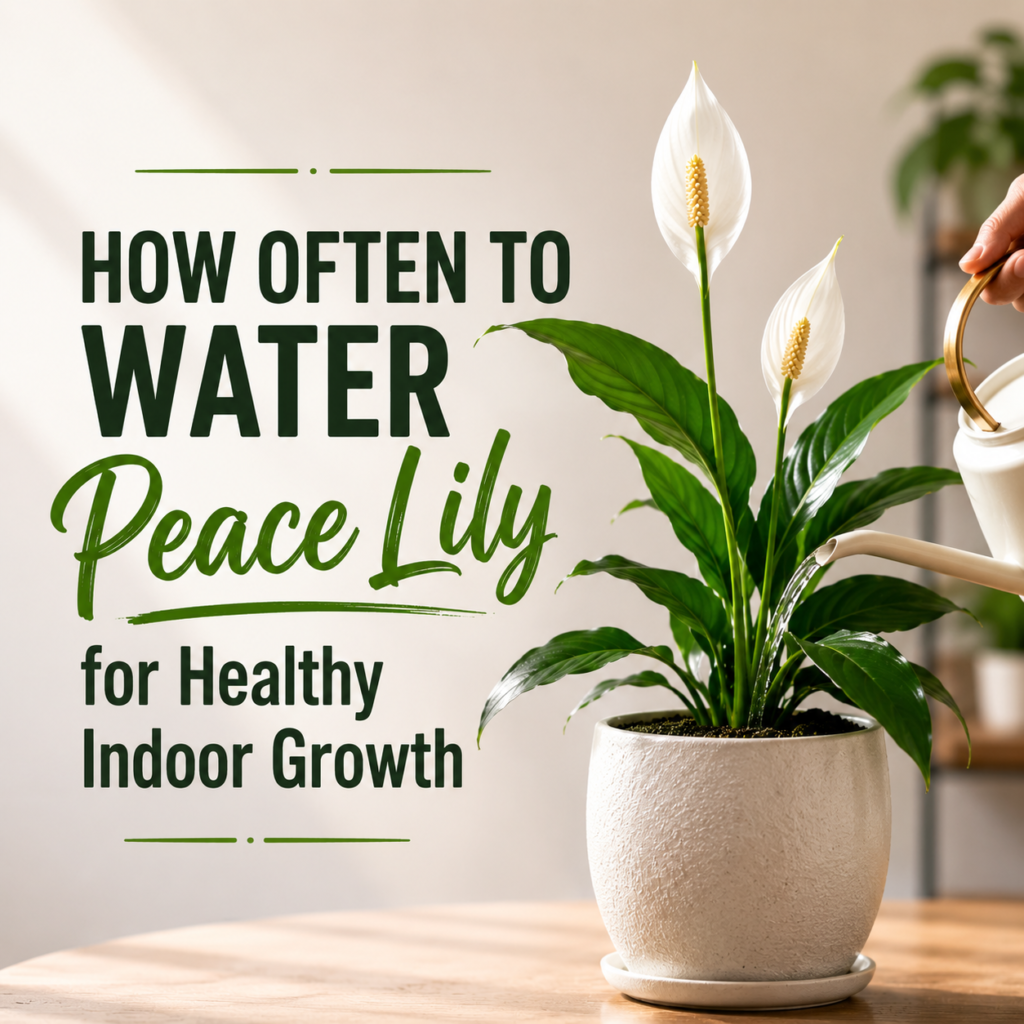
Knowing how often to water peace lily is essential if you want this popular indoor plant to stay healthy and continue producing its elegant white blooms. Peace lilies are often recommended to beginners, but improper watering is the most common reason they stop flowering, develop yellow leaves, or decline altogether. This guide explains exactly when and how to water a peace lily, how to read the plant’s signals, and how to avoid common watering mistakes so your peace lily houseplant thrives indoors like other well-maintained flowering plants.
Why proper watering is critical for peace lilies
Peace lilies are tropical plants that naturally grow in warm, humid environments where the soil stays consistently moist but never waterlogged. Indoors, these conditions are difficult to replicate without understanding the plant’s watering needs. Unlike drought-tolerant houseplants, peace lilies are sensitive to both excess water and prolonged dryness.
Because peace lilies are flowering plants, watering directly affects not only leaf appearance but also root health, nutrient absorption, and bloom production. Incorrect watering can weaken roots, reduce flowering, and shorten the plant’s lifespan. Mastering peace lily watering is the foundation of successful indoor care.
How often to water peace lily in typical indoor conditions
The most reliable answer to how often to water peace lily is based on soil moisture, not a calendar. A peace lily should be watered when the top 1 inch of soil feels dry to the touch. This method adapts to your specific home environment and prevents both overwatering and underwatering.
In most homes, this results in watering about once a week. However, peace lilies in warm, bright rooms may need water every 3 to 4 days, while those in cooler or low-light areas may only need water every 10 to 14 days. The key is consistency and observation rather than a fixed schedule.
What affects how frequently a peace lily needs water
Several environmental and container-related factors influence how quickly a peace lily uses water. Understanding these factors helps you adjust your watering routine accurately.
Light exposure
Peace lilies placed in bright, indirect light grow more actively and use water faster. Plants in low-light conditions grow more slowly and therefore need less frequent watering. Light levels are one of the biggest influences on watering frequency.
Indoor temperature and humidity
Warm indoor temperatures increase evaporation from the soil and transpiration from leaves. Homes with heating or air conditioning often have dry air, causing soil to dry faster. Higher humidity slows moisture loss and reduces watering frequency.
Pot size and material
Smaller pots dry out faster than larger ones. Terracotta pots are porous and allow moisture to evaporate through the sides, requiring more frequent watering. Plastic and glazed ceramic pots retain moisture longer.
Soil composition and drainage
Well-draining potting mixes allow excess water to escape and keep roots oxygenated. Dense or compacted soil retains too much water and significantly increases the risk of root rot, even if watering frequency seems reasonable.
Seasonal growth patterns
Peace lilies grow more actively in spring and summer, which increases water demand. During fall and winter, growth slows and watering frequency should be reduced to match the plant’s lower needs.
How to water a peace lily plant correctly
Watering technique is just as important as timing. Even if you water at the right moment, improper technique can still harm the plant.
Top watering for routine care
Top watering is the best method for regular peace lily watering. Slowly pour water evenly over the soil surface until water drains from the bottom of the pot. This ensures the entire root system is evenly moistened. Always allow excess water to drain fully and empty the saucer.
When bottom watering is useful
Bottom watering can be helpful if the soil has become very dry and compacted. Place the pot in a shallow container of water for 15 to 30 minutes, allowing moisture to wick upward. Remove the pot and let it drain completely. This method should be used occasionally, not as the primary watering method.
How much water to give each time
Each watering should thoroughly moisten the root ball. Light surface watering is ineffective and encourages shallow roots. Proper watering results in evenly damp soil, not soggy conditions.
Signs your peace lily needs water
Peace lilies are known for clearly showing when they need attention. Learning these signs helps you respond before stress becomes severe.
Early signs of underwatering
Leaves may begin to droop slightly while remaining green. The pot feels lighter when lifted, and the top inch of soil feels dry. Watering at this stage usually results in quick recovery within hours.
Severe underwatering symptoms
Leaves droop dramatically, curl, or develop brown edges. Soil may shrink away from the sides of the pot. Repeated severe drying weakens the plant and reduces flowering over time.
Can you over water a peace lily
Yes, overwatering is one of the most common and damaging mistakes made with peace lilies. These plants need moisture, but they also require oxygen around their roots.
Signs of overwatering
Overwatered peace lilies often develop yellow leaves, especially near the base of the plant. Stems may feel soft, and the soil remains wet for long periods. A musty smell from the pot is a strong indicator of root problems.
Why overwatering causes serious damage
Constantly wet soil suffocates roots and prevents proper nutrient uptake. Over time, this leads to root rot, which is difficult to reverse and can permanently damage the plant.
How to fix an overwatered peace lily
If overwatering is caught early, a peace lily can often recover with prompt action.
Immediate corrective steps
Stop watering until the top inch of soil dries. Ensure the pot has proper drainage and is not sitting in standing water. Improve airflow around the plant to help soil dry evenly.
Repotting when root damage is present
If roots are brown, mushy, or foul-smelling, remove the plant from its pot. Trim damaged roots and repot into fresh, well-draining soil in a clean container with drainage holes. Resume watering cautiously.
Tap water and peace lily watering concerns
While many peace lilies tolerate tap water, some are sensitive to chemicals and salts commonly found in household water supplies.
How to reduce tap water problems
Allow tap water to sit for 12 to 24 hours before using it to reduce chlorine levels. Using filtered or distilled water occasionally can help prevent brown leaf tips. Flushing the soil every few months removes salt buildup.
How many days can a peace lily go without water
Under average indoor conditions, a peace lily can survive without water for about 7 to 10 days. In cooler or low-light environments, it may tolerate slightly longer periods. In warm, bright rooms, visible stress may appear after just a few days.
Allowing the plant to dry out completely on a regular basis weakens roots, reduces flowering, and shortens the plant’s lifespan.
Preventing watering problems long term
Long-term success with peace lilies depends on proper setup and consistent monitoring.
Choosing the right pot and soil
Always use a pot with drainage holes and a loose, well-draining potting mix designed for indoor plants. Avoid heavy garden soil, which compacts easily and retains excess moisture.
Monitoring moisture instead of following a schedule
Check soil moisture weekly even if you do not water every time. This habit helps you adjust for seasonal changes and prevents common watering mistakes. For full indoor care guidance, interlink this article with your how to care for peace lily indoors page.
FAQs
Can you over water a peace lily?
Yes, peace lilies can be overwatered very easily, especially when planted in poorly draining soil or pots without drainage holes. Overwatering leads to yellow leaves, soft stems, and root rot. Always allow the top inch of soil to dry before watering again and ensure excess water drains freely.
Should you water peace lily from top or bottom?
Top watering is recommended for regular peace lily care because it evenly moistens the root ball and flushes excess salts from the soil. Bottom watering can be useful occasionally when soil becomes overly dry, but it should not replace routine top watering.
How many days can a peace lily go without water?
Most peace lilies can go without water for about one week under average indoor conditions. However, stress may appear sooner in warm or bright environments. Regularly allowing the plant to go too long without water reduces flowering and overall plant health.
Is tap water okay for peace lilies?
Tap water is usually safe for peace lilies, but some plants may develop brown leaf tips due to fluoride, chlorine, or salt buildup. Letting water sit overnight or using filtered water can reduce these issues and improve leaf appearance over time.
How to tell the difference between overwatering and underwatering peace lily?
The most reliable way to tell the difference is to check the soil. Wet soil combined with yellow leaves usually indicates overwatering, while dry soil with drooping leaves indicates underwatering. Pot weight and soil texture provide quick confirmation.