
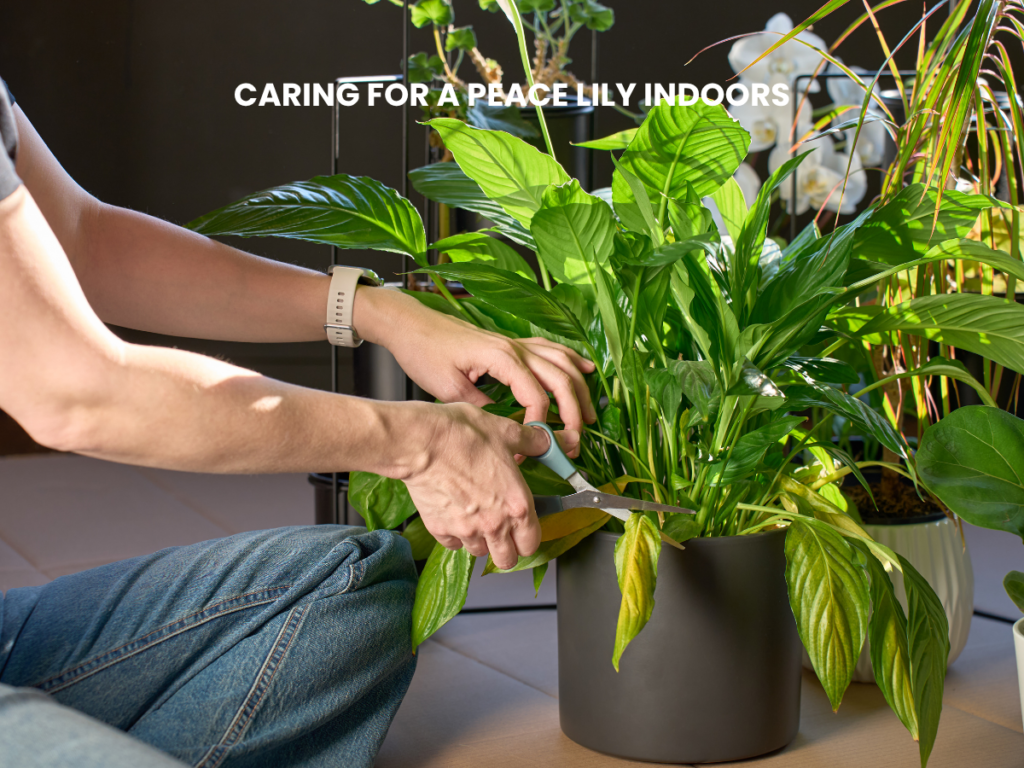
The peace lily is one of the most popular indoor flowering plant for a reason. It looks elegant, adapts well to indoor environments, and clearly signals what it needs. If you are wondering how to take care of a peace lily plant, this guide walks you through everything step by step, from basic care to flowering, propagation, and common problems.
Whether you are new to houseplants or want your peace lily to grow healthier and bloom more often, understanding its natural preferences makes all the difference.
Is Peace Lily an Indoor Plant?
Yes, the peace lily is an indoor plant and is best grown indoors in most regions, including India. In nature, peace lilies grow under tropical forest canopies, which means they are adapted to filtered light, warm temperatures, and steady moisture.
As an indoor plant, peace lily performs well in:
- Living rooms with bright, indirect light
- Bedrooms and offices with moderate natural light
- Apartments where direct sun is limited
Because of this adaptability, many people choose the peace lily as their first peace lily indoor plant.
Peace Lily Plant Benefits
Before getting into care details, it helps to understand why peace lily is such a popular choice.
Visual and indoor benefits
- Produces elegant white blooms that last for weeks
- Has glossy green leaves that improve indoor aesthetics
- Grows well in containers without frequent pruning
- Capable of blooming throughout the year indoors when grown in bright, indirect light and fed regularly
Practical benefits
- Known for its ability to tolerate low light conditions
- Clearly shows signs when it needs water, making care easier
- Suitable for busy households and beginners
How to Take Care of a Peace Lily Plant
Peace lily care is simple when you follow its natural growing conditions. The key is balance. Not too much light, not too much water, and consistent indoor conditions.
Light Requirements
Peace lilies prefer bright, indirect light. They can survive in low light, but flowering becomes rare in darker areas.
- Best placement: Near a window with filtered light
- Avoid: Direct afternoon sun, which can scorch leaves
- Low light tolerance: Good, but flowers may not appear
If your peace lily has healthy leaves but no flowers, light is often the issue.
Watering a Peace Lily
Watering is the most important part of peace lily plant care.
- Water when the top 2 to 3 cm of soil feels dry
- Use room-temperature water
- Ensure excess water drains out of the pot
Peace lilies are sensitive to overwatering. Constantly wet soil can lead to root rot, while underwatering causes drooping leaves. Interestingly, peace lilies wilt dramatically when thirsty, but they usually recover quickly after watering.
Soil and Pot Selection
- Use a well-draining indoor potting mix
- Choose a pot with drainage holes
- Avoid heavy garden soil
A slightly loose, aerated mix helps roots stay healthy and prevents water buildup.
Temperature and Humidity
Peace lilies prefer stable indoor conditions.
- Ideal temperature: 18°C to 27°C
- Avoid cold drafts and hot air from heaters
- Moderate humidity supports better leaf health
Normal indoor humidity is usually sufficient, but very dry air may cause brown leaf tips.
How to Grow Peace Lily Successfully Indoors
To grow a healthy peace lily, consistency matters more than intensity. Avoid frequently moving the plant between rooms. Once placed in a suitable spot, let it adapt.
Key growth tips:
- Rotate the pot occasionally for even growth
- Clean leaves gently to remove dust
- Repot only when roots become crowded
Peace lilies grow at a moderate pace and do not need frequent repotting.
Peace Lily Flower and Flowering Season
The white structure often called the peace lily flower is actually a modified leaf called a spathe, surrounding a central spike.
Indoor flowering behavior
- Peace lily does not have a fixed flowering season indoors
- With sufficient bright, indirect light and regular feeding, it can bloom multiple times a year
- In well-lit indoor spaces, flowering may occur almost continuously with short breaks
This is why peace lily is considered an all-season indoor flowering plant, rather than a strictly seasonal one.
Lack of flowers does not mean the plant is unhealthy. It usually means the light is insufficient or feeding is irregular.
How to Make a Peace Lily Bloom
If your peace lily is healthy but not flowering, try these adjustments:
- Move it to brighter, indirect light
- Feed lightly during the growing season (spring to summer)
- Avoid oversized pots, which encourage leaf growth over flowers
- Maintain consistent watering
Flowering cannot be forced instantly, but these changes improve long-term results.
Types of Peace Lily You Can Grow Indoors
There are several types of peace lily, all suitable as indoor plants.
- Spathiphyllum wallisii: Compact and most common variety
- Spathiphyllum ‘Sensation’: Larger leaves, needs more space
- Mini varieties: Suitable for desks and small shelves
Care requirements remain mostly the same across varieties.
How to Propagate Peace Lily
Peace lilies are propagated by division, not by cuttings.
Propagation steps
- Remove the plant gently from its pot
- Separate natural root clumps with leaves attached
- Plant each division in fresh potting mix
- Water lightly and place in indirect light
The best time to propagate is during repotting, usually in spring.
Common Peace Lily Problems and Solutions
Yellow leaves
Usually caused by overwatering or poor drainage. Check soil moisture and drainage holes.
Black leaf tips
Often linked to excess salts from fertilizer or very dry air. Flush soil occasionally and reduce feeding.
Drooping leaves
A sign of underwatering. Water thoroughly and allow excess water to drain.
Addressing the cause early prevents long-term damage.
Conclusion
Learning how to take care of a peace lily plant is more about understanding balance than following strict rules. With the right light, careful watering, and stable indoor conditions, a peace lily can stay healthy for years and reward you with elegant blooms.
FAQs
Can peace lily grow in water?
Yes, peace lily can grow in water for short periods, but long-term growth is healthier in soil. When grown in water, nutrients must be added regularly.
How to maintain peace lily?
Maintain peace lily by providing bright, indirect light, watering when the soil partially dries, and avoiding overwatering or harsh sunlight.
Why peace lily leaves turn black?
Black leaves or tips are often caused by overwatering, fertilizer buildup, or exposure to cold drafts. Improving drainage and reducing feeding usually helps.
Why peace lily leaves turn yellow?
Yellow leaves are commonly due to excess watering, poor drainage, or natural aging of older leaves.
How often to water peace lily?
Water peace lily when the top layer of soil feels dry, usually once every 5 to 7 days depending on indoor conditions.
How to make a peace lily bloom?
To encourage blooming, increase indirect light, feed lightly during the growing season, and maintain consistent watering.
When does a peace lily bloom?
Peace lilies typically bloom in spring or early summer, but indoor plants may flower irregularly depending on care and light levels.