
If you live with cats and enjoy indoor flowering plants, you may be asking an important question: are peace lilies toxic to cats? The answer is yes. Peace lilies are toxic to cats, but the level and type of danger is often misunderstood. This confusion can lead to unnecessary panic in some cases and delayed veterinary care in others.
This article explains exactly how peace lilies affect cats, why they are different from true lilies, what symptoms to watch for, when to seek veterinary care, and how to prevent exposure altogether. The goal is to help cat owners make informed, safety-first decisions.
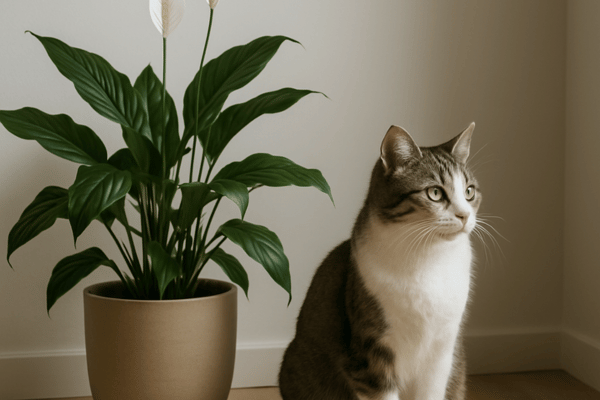
What Are Peace Lilies?
Peace lilies are popular flowering plants commonly grown indoors for their elegant white blooms and dark green leaves. Their botanical name is Spathiphyllum, and they belong to the Araceae plant family.
Despite their popularity, many pet owners are unaware that peace lilies contain compounds that can irritate cats if the plant is chewed or bitten.
Confusion frequently arises because peace lilies share the word “lily” with other plants that are far more dangerous to cats.
Peace Lilies vs True Lilies: Why This Difference Is Critical
Understanding this distinction is essential for cat safety.
What Are True Lilies?
True lilies belong to the Lilium and Hemerocallis genera. Examples include Easter lilies, Asiatic lilies, tiger lilies, and daylilies. These plants are extremely toxic to cats.
Even very small exposures, such as licking pollen from fur or drinking water from a vase containing lilies, can lead to acute kidney failure. Without rapid veterinary treatment, poisoning from true lilies is often fatal.
How Peace Lilies Are Different
Peace lilies are not true lilies. They do not cause kidney failure. Instead, they contain insoluble calcium oxalate crystals that cause localized irritation.
Key differences include:
- True lilies cause internal organ damage, especially to the kidneys
- Peace lilies cause irritation to the mouth, throat, and digestive tract
- True lilies require immediate emergency treatment
- Peace lily exposure is usually mild to moderate when addressed promptly
Because the word “lily” appears in both names, many owners mistakenly assume peace lilies are either harmless or just as deadly as true lilies. Both assumptions can be dangerous.
Also read: How to take care of peace lily indoors
Are Peace Lilies Toxic to Cats?
Yes, are peace lilies toxic to cats is a valid concern. Peace lilies are toxic because they contain calcium oxalate crystals in all parts of the plant.
When a cat chews on the leaves, stems, or flowers, these microscopic crystals are released. They embed in the soft tissues of the mouth, tongue, and throat, causing immediate pain and inflammation.
Peace lilies are generally considered mildly to moderately toxic. While they are uncomfortable and potentially distressing for cats, they are rarely life threatening when managed properly.
How Peace Lily Toxicity Affects Cats
Peace lily toxicity works differently from poisons that are absorbed into the bloodstream.
Calcium oxalate crystals cause:
- Mechanical injury to soft tissues
- Inflammation and swelling
- Immediate discomfort that discourages further chewing
Because the irritation occurs right away, most cats stop chewing quickly, which limits the amount of exposure and reduces the severity of symptoms.
Symptoms of Peace Lily Poisoning in Cats
Symptoms usually appear soon after exposure and are concentrated around the mouth and digestive system.
Common Symptoms
- Excessive drooling or foaming at the mouth
- Pawing at the mouth or rubbing the face
- Oral pain, redness, or swelling
- Vomiting
- Gagging or retching
- Difficulty swallowing
- Reduced appetite
- Mild lethargy
Symptom Severity
Most cases are mild to moderate. Symptoms typically peak within the first few hours and gradually improve within 12 to 24 hours once the plant is removed.
More severe reactions are uncommon but can occur if a large amount of plant material is consumed or if swelling affects breathing.
How Quickly Do Cats Show Symptoms After Eating a Peace Lily?
Cats usually show symptoms within minutes to a few hours after chewing or biting a peace lily.
This rapid onset helps distinguish peace lily exposure from other plant poisonings that cause delayed symptoms. Immediate drooling or pawing at the mouth is often the first sign owners notice.
Severity depends on:
- The amount of plant chewed
- Whether the plant was swallowed
- The cat’s size and age
- Individual sensitivity
What Part of a Peace Lily Is Toxic to Cats?
All parts of a peace lily are toxic to cats. This includes: leaves, stems, flowers, sap.
Calcium oxalate crystals are present throughout the plant and are released when the plant tissue is damaged. Even a single bite can cause noticeable irritation.
What Happens If a Cat Eats a Peace Lily Leaf?
In a typical scenario, a cat bites a peace lily leaf and immediately experiences discomfort. Drooling and pawing at the mouth often follow within minutes.
If plant material is swallowed, vomiting may occur as the digestive tract becomes irritated. Most cats recover fully within a day with proper monitoring and no further exposure.
Repeated access to the plant increases the risk of prolonged or worsening symptoms.
What to Do If Your Cat Eats a Peace Lily
Taking prompt action can reduce discomfort and prevent complications.
Immediate Steps
- Remove the peace lily from your cat’s reach immediately.
- Gently wipe or rinse your cat’s mouth with clean water if it can be done safely.
- Do not induce vomiting unless specifically instructed by a veterinarian.
- Remove any visible plant material from the mouth or fur.
- Contact your veterinarian or a pet poison helpline for professional guidance.
Monitoring at Home
If symptoms are mild, monitor your cat closely for the next 24 hours. Offer fresh water and soft food once appetite returns. Symptoms should steadily improve rather than worsen.
When Should You Take a Cat to the Vet?
Veterinary care is recommended if symptoms are more than mild or do not improve.
Seek Veterinary Care If You Notice
- Persistent or repeated vomiting
- Swelling that interferes with breathing or swallowing
- Signs of significant pain or distress
- Refusal to eat or drink for more than 24 hours
- Increasing lethargy or signs of dehydration
Emergency Situations
Immediate veterinary attention is critical if:
- There is any possibility the plant was a true lily
- You are unsure about plant identification
- Symptoms worsen instead of improving
When in doubt, it is always safer to contact a veterinarian rather than wait.
Can You Have a Peace Lily in a House With Cats?
Many owners wonder whether peace lily and cats can safely coexist.
Peace lilies are not considered safe for cats, but risk can sometimes be managed depending on the household.
Peace lilies may be acceptable if:
- The plant is kept in a room the cat cannot access
- Physical barriers completely prevent contact
- The cat has no history of chewing plants
They are not recommended for homes with curious kittens, known plant chewers, or situations where supervision is inconsistent.
Preventing Peace Lily Poisoning in Cats
Prevention is the most reliable way to protect cats.
Environmental Controls
- Keep peace lilies out of reach or avoid them entirely
- Use closed rooms rather than shelves when possible
- Avoid placing plants near furniture cats can climb
Behavioral Considerations
Cats often chew plants due to curiosity, boredom, or stress. Deterrent sprays may help but should not be relied on as the sole prevention method.
Providing safe alternatives such as cat grass can help redirect chewing behavior.
Choosing Safer Plants
If you enjoy indoor flowering plants, consider choosing cat safe varieties instead of peace lilies. Eliminating toxic plants removes the risk altogether.
When learning how to care for peace lily indoors, plant safety should always be considered alongside light, watering, and placement.
Conclusion
So, are peace lilies toxic to cats? Yes, they are. However, they are far less dangerous than true lilies that can cause kidney failure.
By understanding the difference, recognizing symptoms early, knowing when veterinary care is needed, and taking preventive steps, cat owners can make safer decisions about peace lilies and other indoor flowering plants while protecting their pets’ health.
Frequently Asked Questions
Can I have a peace lily in the house with a cat?
You can, but only with strict precautions. Peace lilies are toxic if chewed and should be kept completely out of reach.
What happens if my cat eats a peace lily leaf?
Most cats experience immediate mouth irritation, drooling, and sometimes vomiting. Symptoms usually resolve within 24 hours.
What part of a peace lily is poisonous?
All parts of the plant contain calcium oxalate crystals and can cause irritation.
How do you treat peace lily poisoning in cats?
Treatment involves removing access to the plant, rinsing the mouth if possible, and contacting a veterinarian for guidance.
How quickly do cats show signs of poisoning?
Symptoms typically appear within minutes to a few hours after exposure.